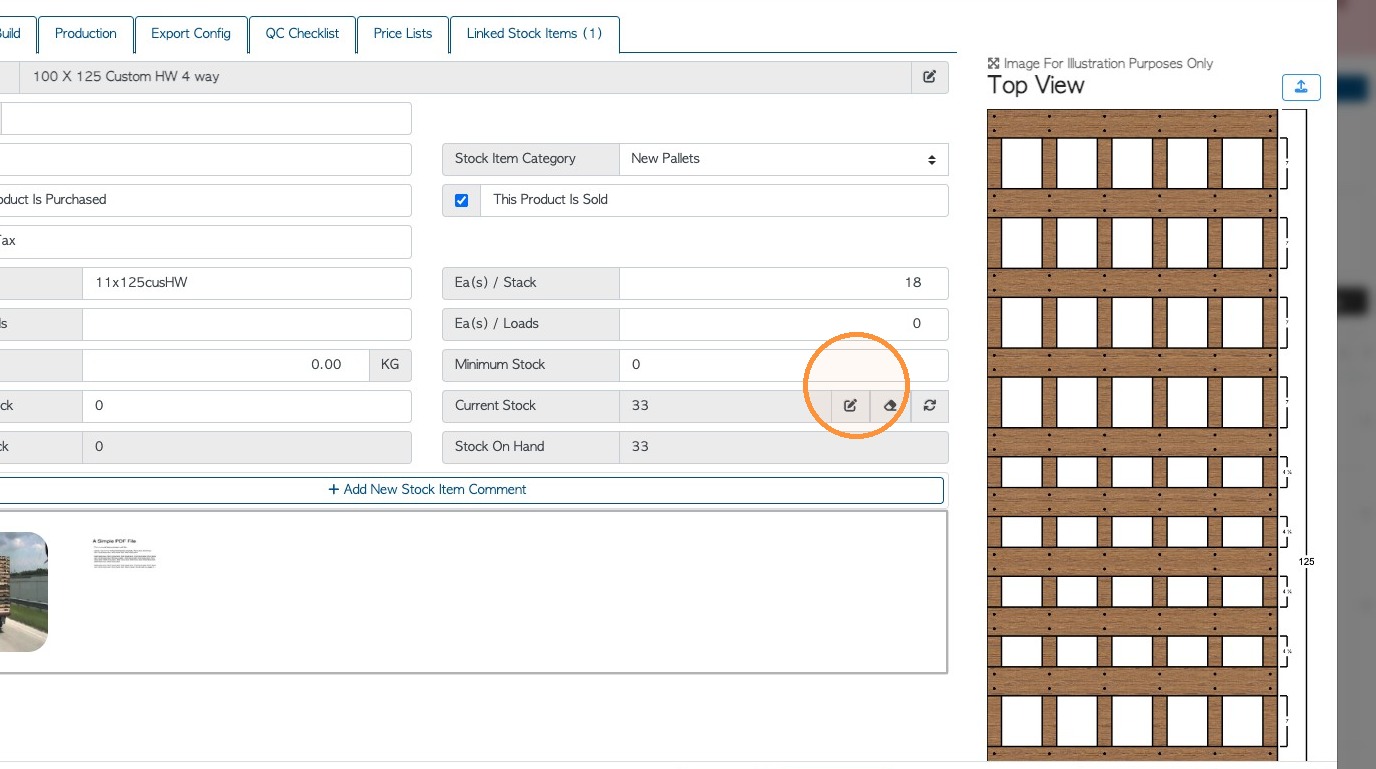
This guide provides a comprehensive overview of managing stock levels within Pallet Connect. It includes automatic flows of inventory change, through transactions and production, as well as features that allow for manual adjustments.
Supplier Purchase Orders
1. There are two main methods of bringing stock into the system. Either by purchasing new lumber to build pallets or by picking up recycled material to repair.
BRINGING PRODUCT IN THROUGH SUPPLIER PURCHASE:
A Supplier Purchase Order is created when lumber is ordered.
NOTE: New Pallets and other pallet related items, such as hardware, can also be purchased through a Supplier.
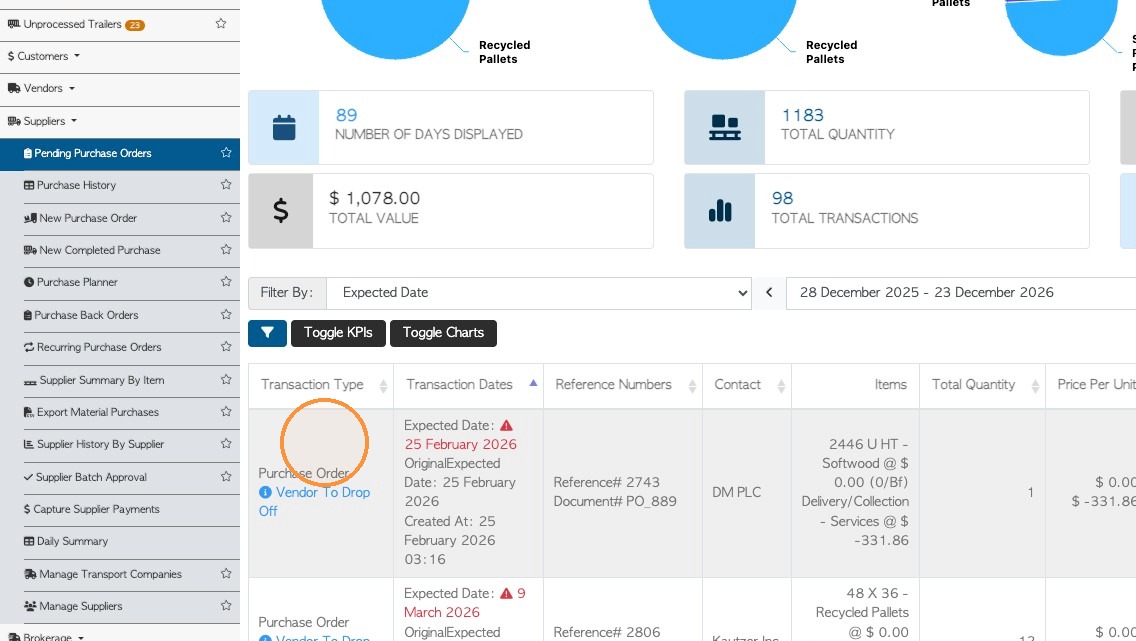
2. When "Receive" is chosen on a Purchase Order, the transaction is completed and the items will be included in current stock.
NOTE: If Approvals are enabled, the transaction must be approved before inventory will update.
Trailer Processing
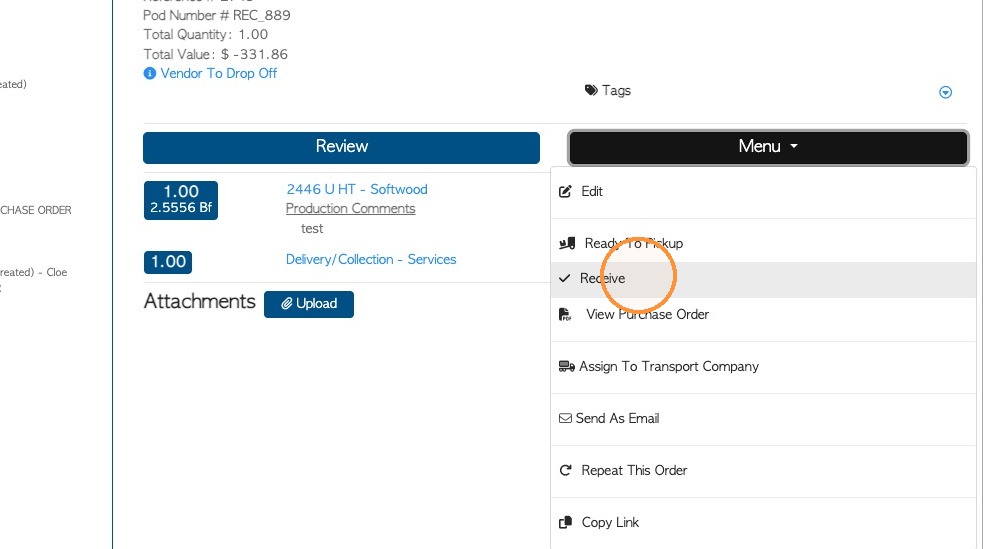
3. BRINGING PRODUCT IN THROUGH VENDOR PURCHASE: When a pick up or drop off is planned, a Vendor Request is created. When the product is retrieved or dropped off, an unprocessed trailer is created.
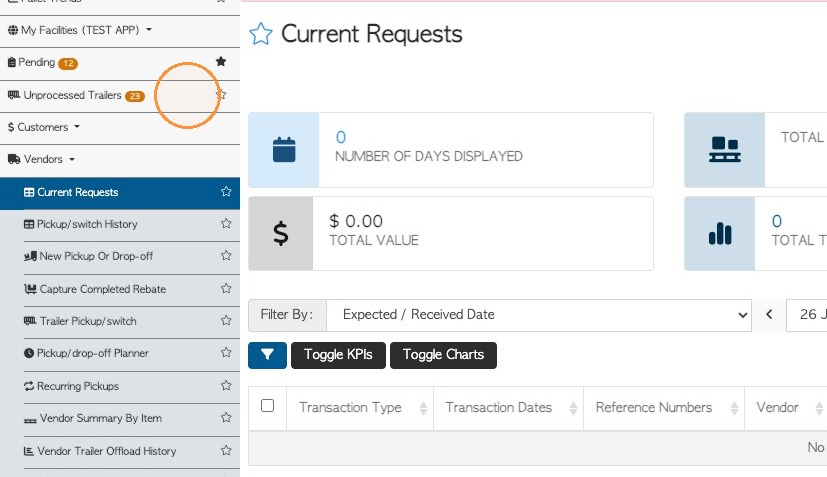
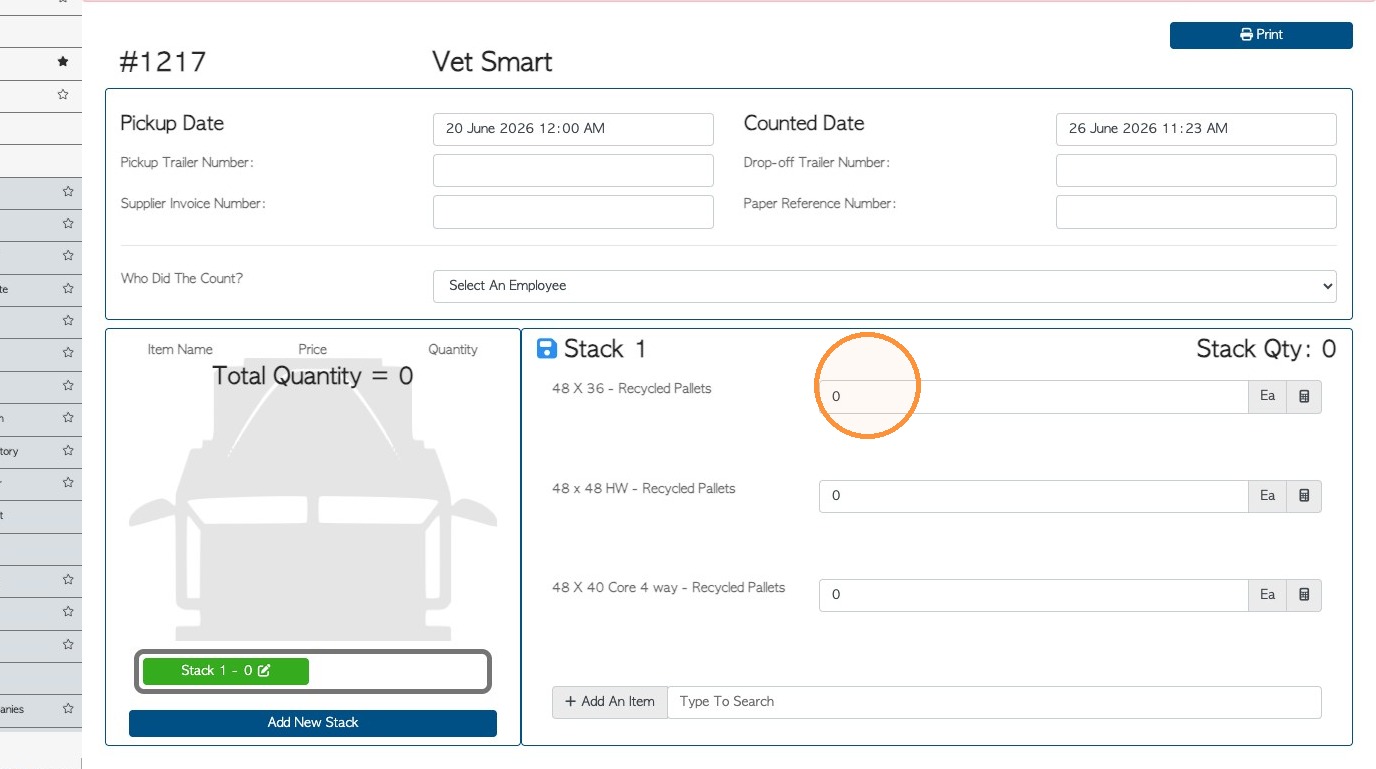
4. Once the count sheet is completed, a Vendor Rebate is created. The stock is received, and is reflected in the current stock level.
NOTE: If pallets are counted at time of pick up, then the unprocessed trailer stage is skipped. The Request becomes a Rebate.
NOTE: If Approvals are enabled, the transaction must be approved for inventory to change.
Production & Stock Management
5. Stock levels will change depending on productions that are recorded within the system,
For example, when received lumber is cut into boards. When components are used in building a pallet, or when a core is repaired into a Grade A or B.
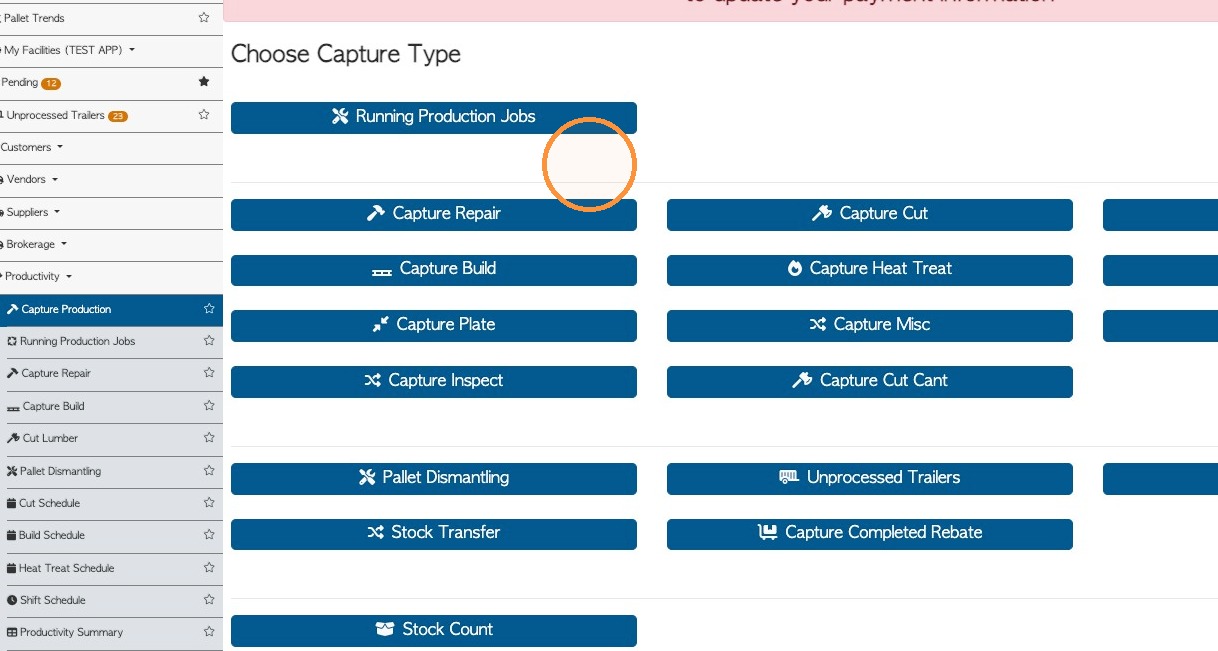
STOCK MANAGEMENT THROUGH PRODUCTION: Select a production capture type in Pallet Connect, to record production stages.
NOTE: The production can be seen as a report in the Productivity Summary.
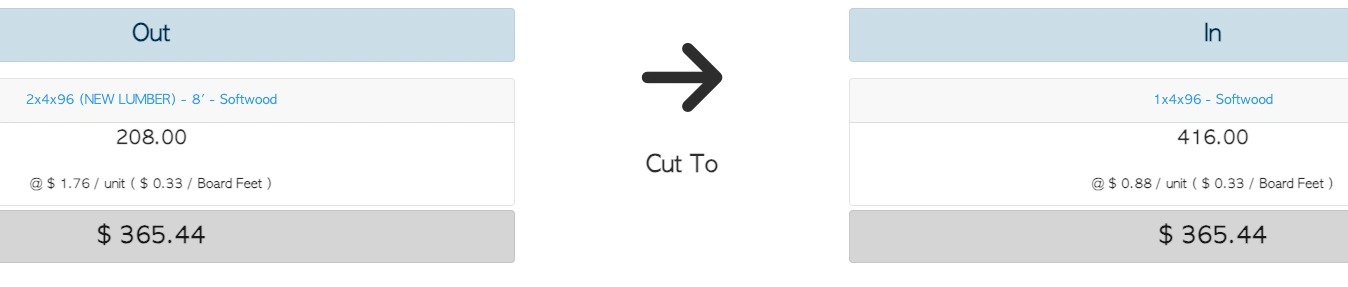
6. For example in this production record, a 'Cut' was captured. It shows lumber "out" and boards "in".
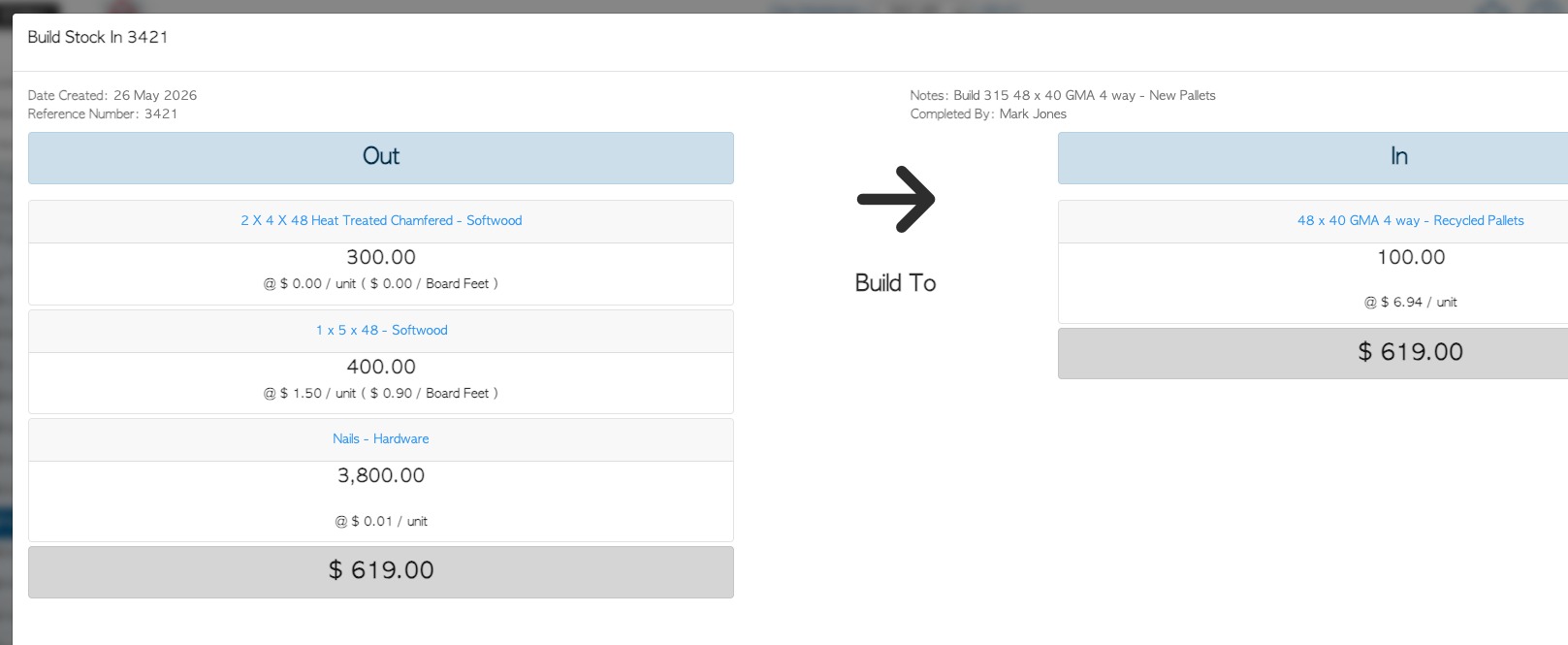
7. NOTE: For boards and components to automatically come out of stock when pallet inventory is built, a build list needs to be inputted. This is essentially a Bill of Materials. The build tab is available for New and Combo pallets.
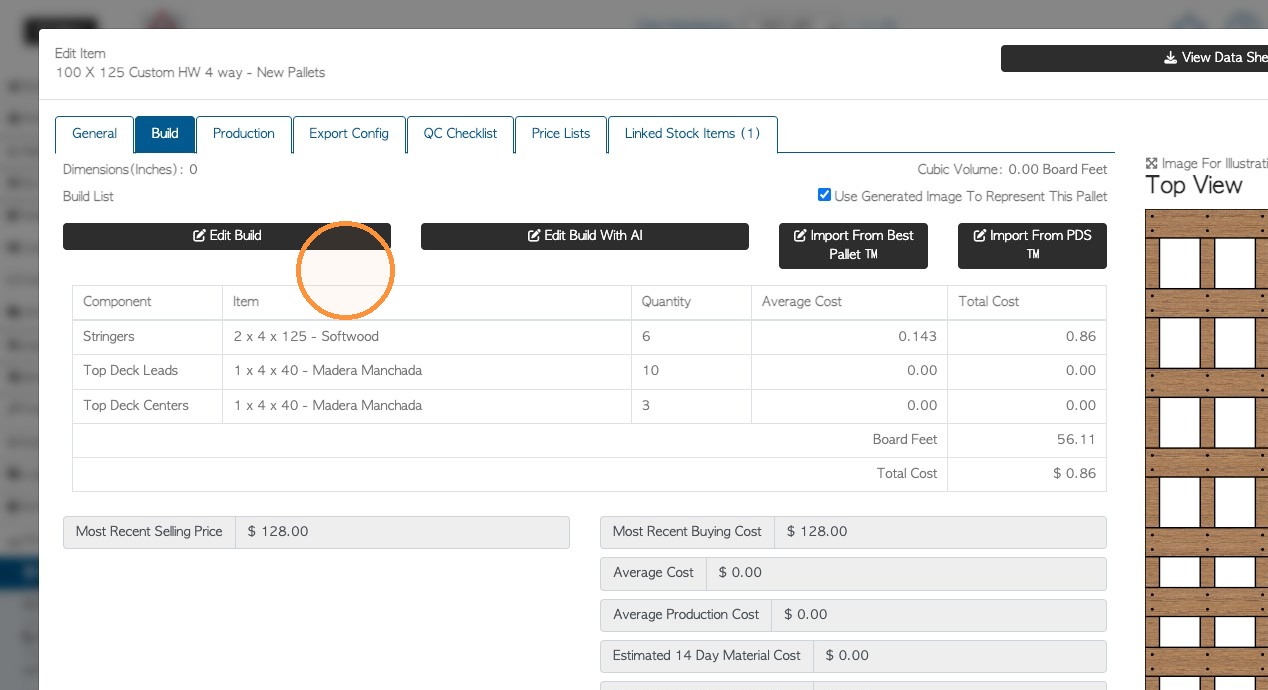
8. In this build example, the components are shown as 'out' and the pallet as 'in'.
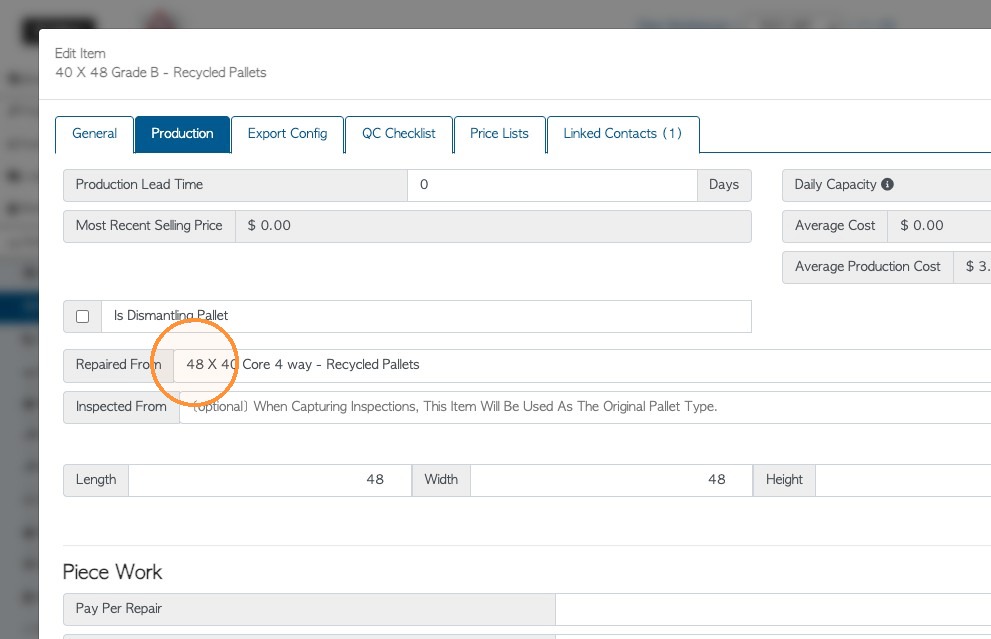
9. NOTE: For cores to come out of inventory during repair, set them up as "repaired from" in the Production tab of the recycled pallet.
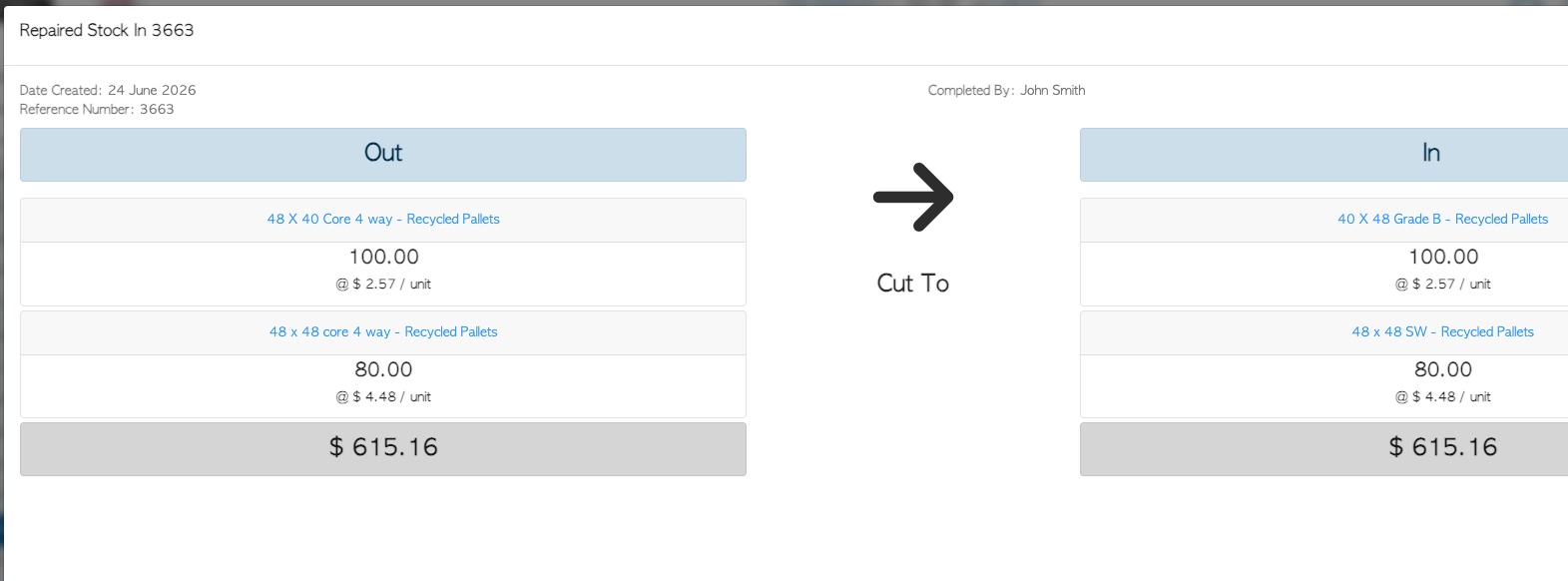
10. In this 'Capture Repair' record, the cores are coming 'out' of inventory and the recycled pallets are 'in' stock.
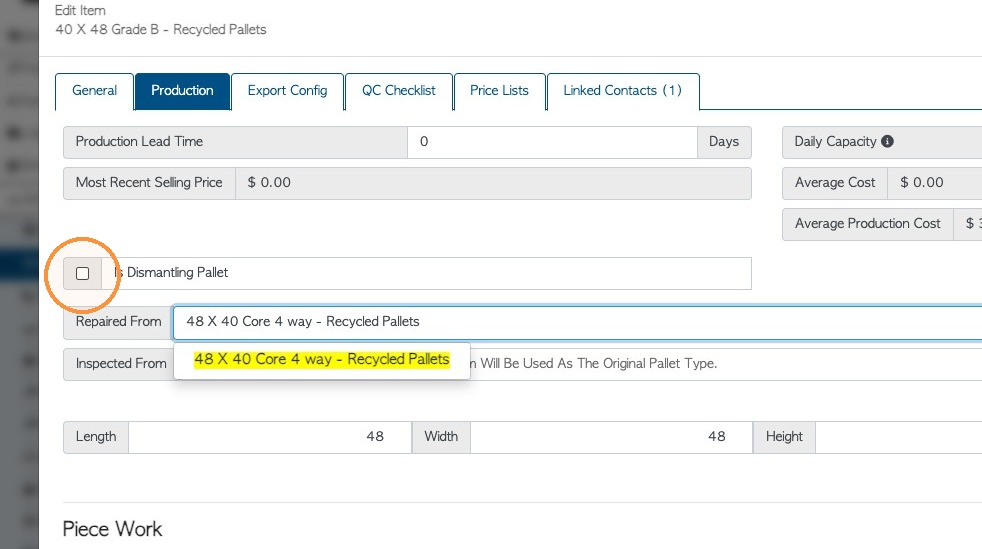
11. NOTE: For recycled pallets to be used for teardown into recycled lumber, click the "Is Dismantling Pallet" field.
Customer Invoicing
12. PRODUCT OUT THROUGH CUSTOMER SALES: The most common way for pallets to be automatically taken out of inventory is for the items to be sold to a Customer. A Customer Order is created when products are requested.
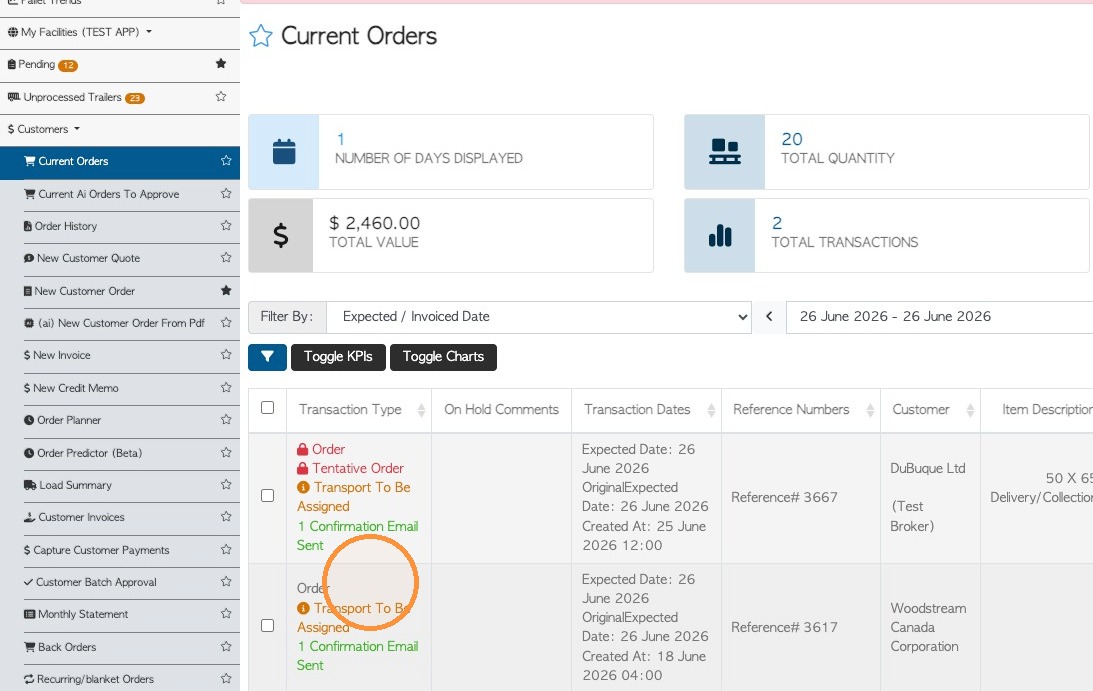
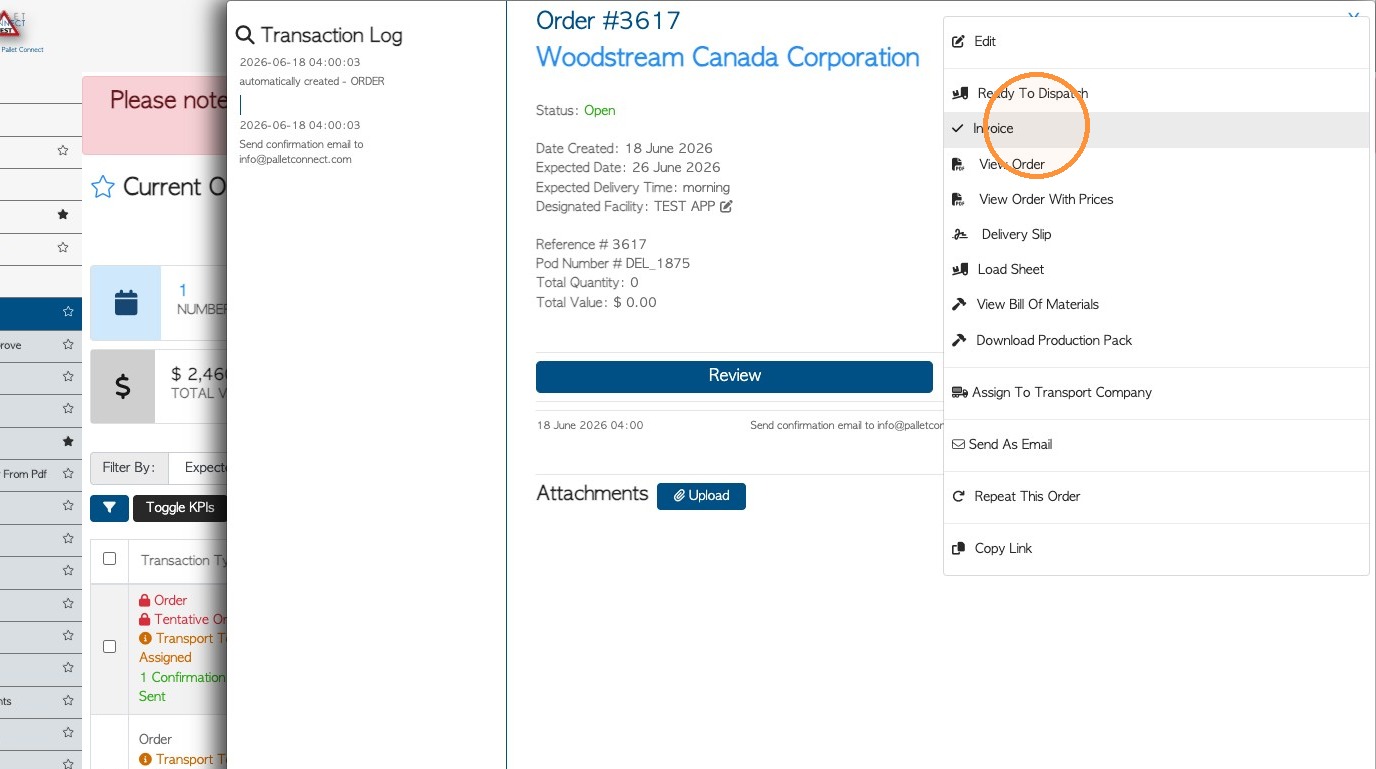
13. When "Invoice" is chosen on a Customer Order, the transaction is completed and the items will be taken out of current stock.
NOTE: If Approvals are enabled, the transaction must be approved before inventory will update.
Stock Adjustment
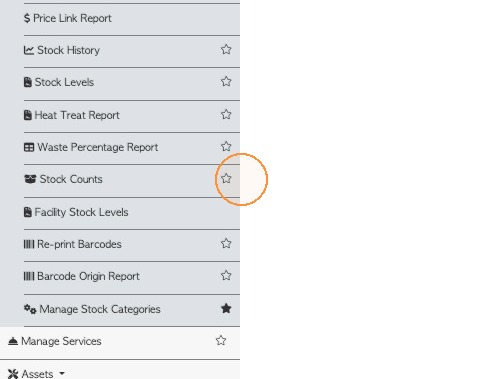
14. STOCK COUNT: As well as through transactions and production, stock can be manually edited through a Stock Count. Multiple items can be updated at once with this feature. See related article.
15. STOCK ADJUSTMENT PER ITEM: Current stock count can also be changed manually through stock adjustment. This is carried out per stock item, in the item profile. See related article on Stock Adjustment.
NOTE: Stock can also be transferred between facilities in a multi facility site. See related article.