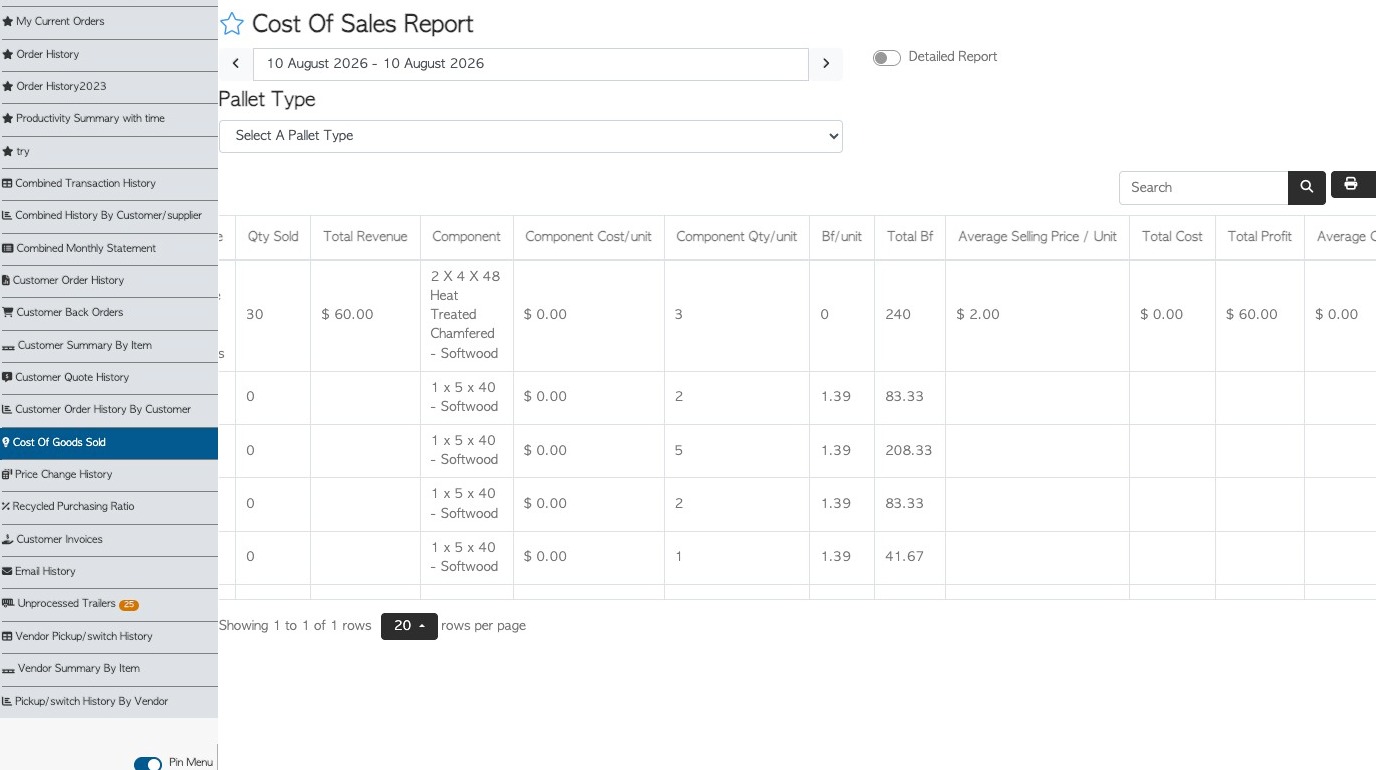
Learn how to accurately track the cost of new pallets in the system. This is achieved by inputting lumber purchases and production costs. When this data is paired with selling costs, the system can then calculate profit margins.
Cost of Materials
1. Supplier Purchase: When bringing Supplier Purchases into Pallet Connect, this gives the system costing information on the raw material needed to build the pallet. The purchases can be lumber, cut boards, components and hardware and even a finished pallet.
For lumber purchases, the board foot price that is captured in the Purchase Order, is carried through to production. Board foot is calculated by width, length and thickness.
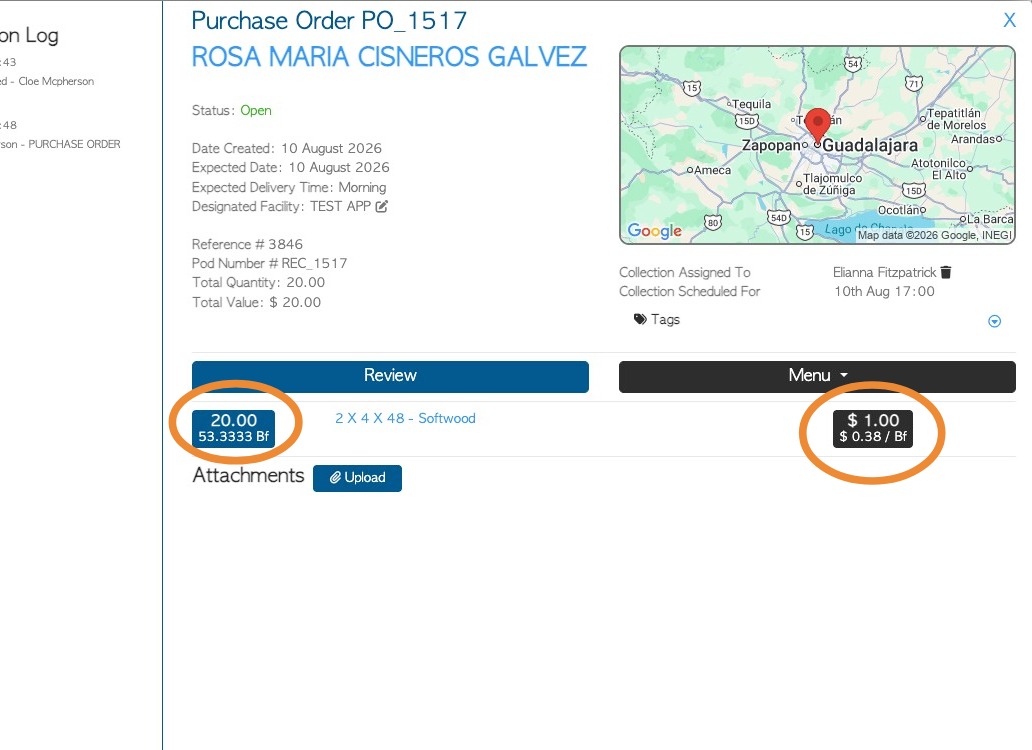
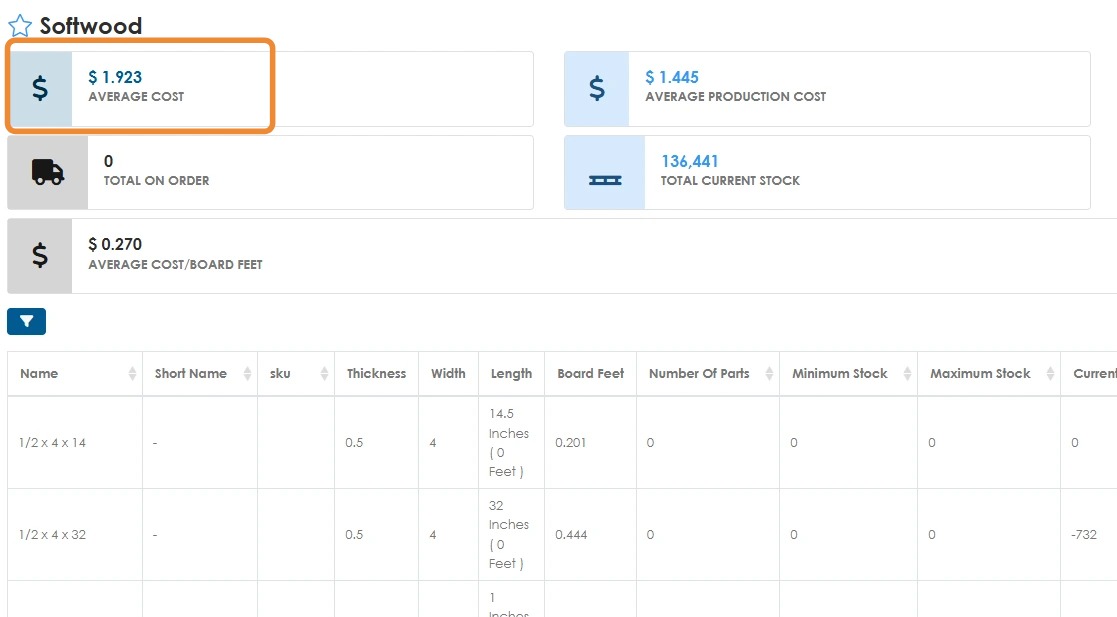
2. NOTE: If there is not a direct source of lumber inputted, that can be used for a board/pallet component, the average cost of the corresponding stock category will be used instead.
For example, if the pallet uses "softwood" components, the average cost of the whole "softwood" category will be used.
Production Costing
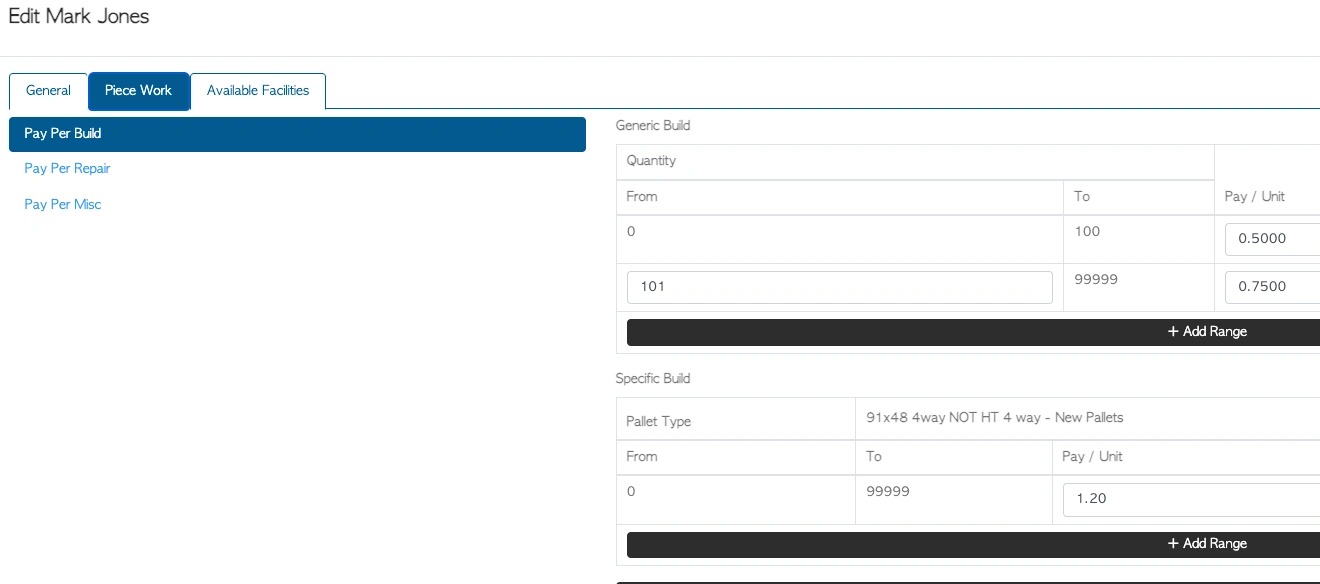
3. Optional Piece Rate: There is an option to set up piece rate for employees, if applicable to the business model. This will be included in the production cost of a pallet. For a new pallet production, piece rates for 'build' are relevant.
NOTE: The piece rate can be added to a stock item or an employee. See related articles.
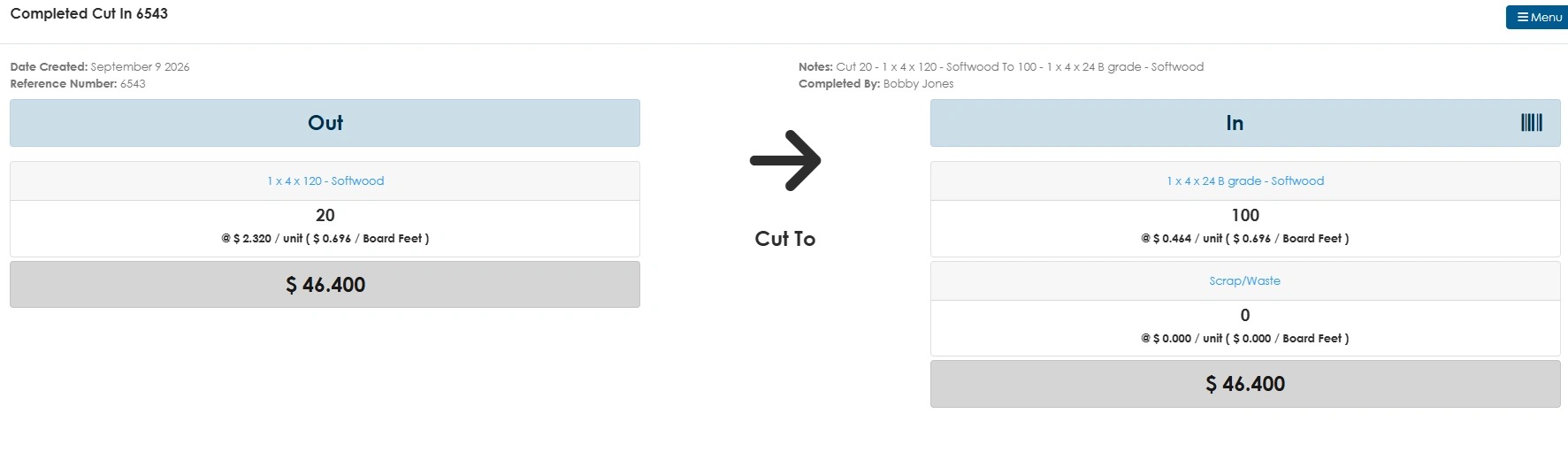
4. Capture Cut: When lumber is cut into boards, the board foot price, from the purchase order, is used to calculate the cost of the components.
For example: if a 1 piece of 2 x4 x 96 lumber cost $2 and is cut into 2 pieces of 2 x4 x 48. The cost of each board would show as $1.
NOTE: If 1 item is cut from larger piece of lumber and the remainder is only scrap, then the whole cost of the lumber goes through to the cut item. If 2 different items are produced from 1 piece of lumber, the cost is split between the 2 cut items.
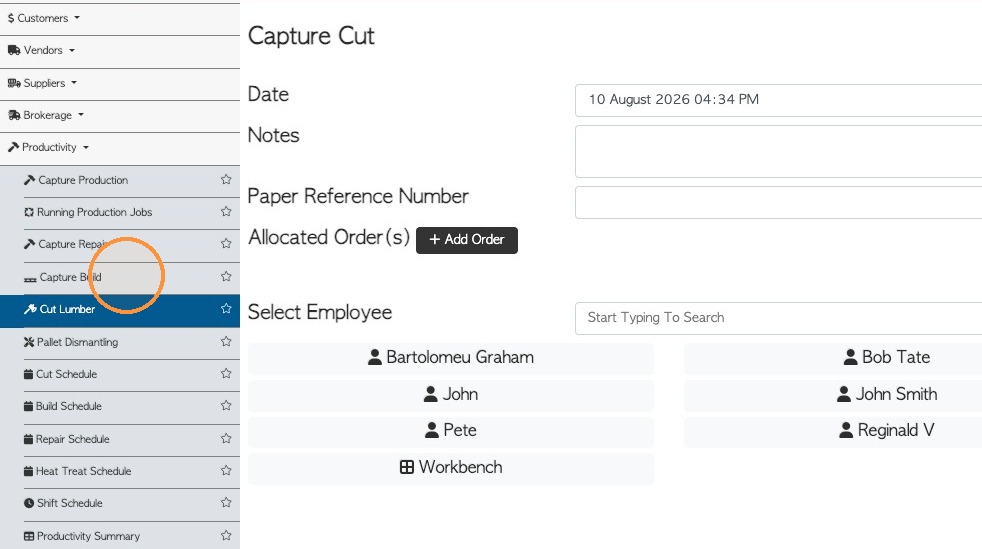
5. This is shown on the production summary record. As the lumber comes out of stock and the boards and scrap go into inventory, the cost is noted and carried through.
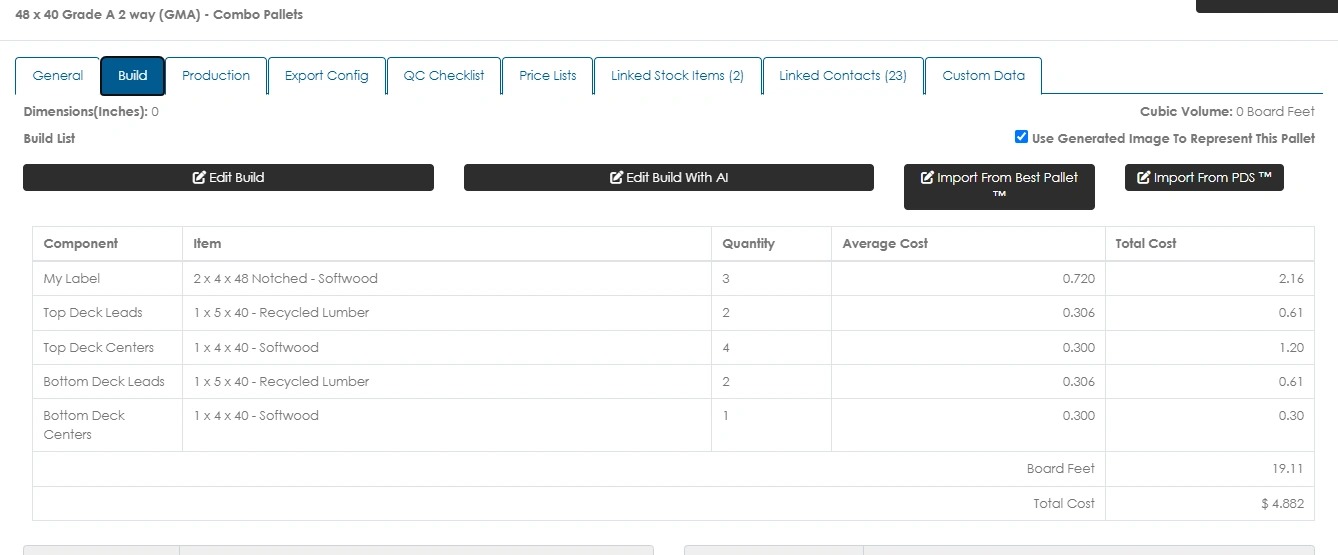
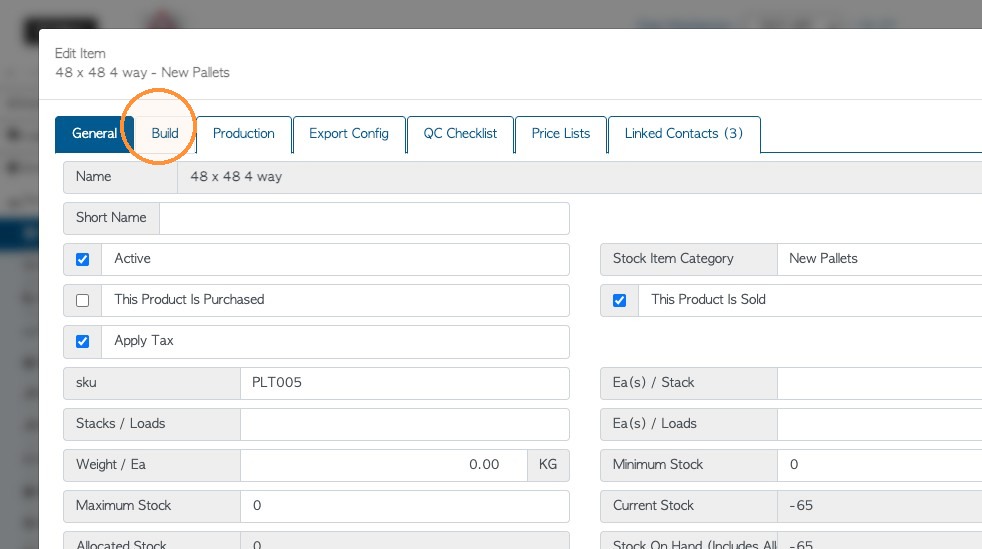
6. Capture Build: The cost of the materials are then included when building the pallet. To capture this effectively, the build list (similar to the BOM) will need to be added to the 'build' tab of the stock item profile.
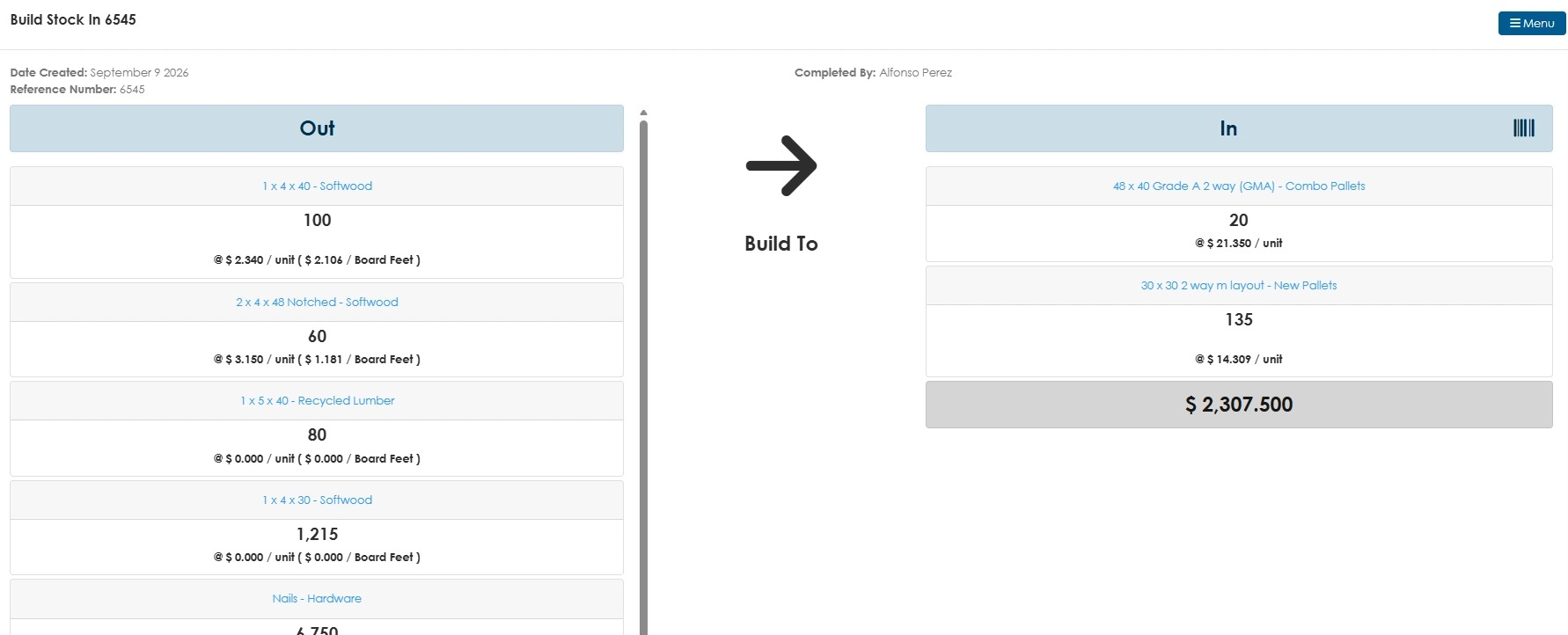
7. When capturing the 'build' during production, the production summary record will show the components coming out of stock and the pallet coming into inventory. The associated costs will also be displayed and applied.
Customer Sales
8. SELLING PRICE: The selling price of the new pallet is updated when a customer invoice is created and approved.
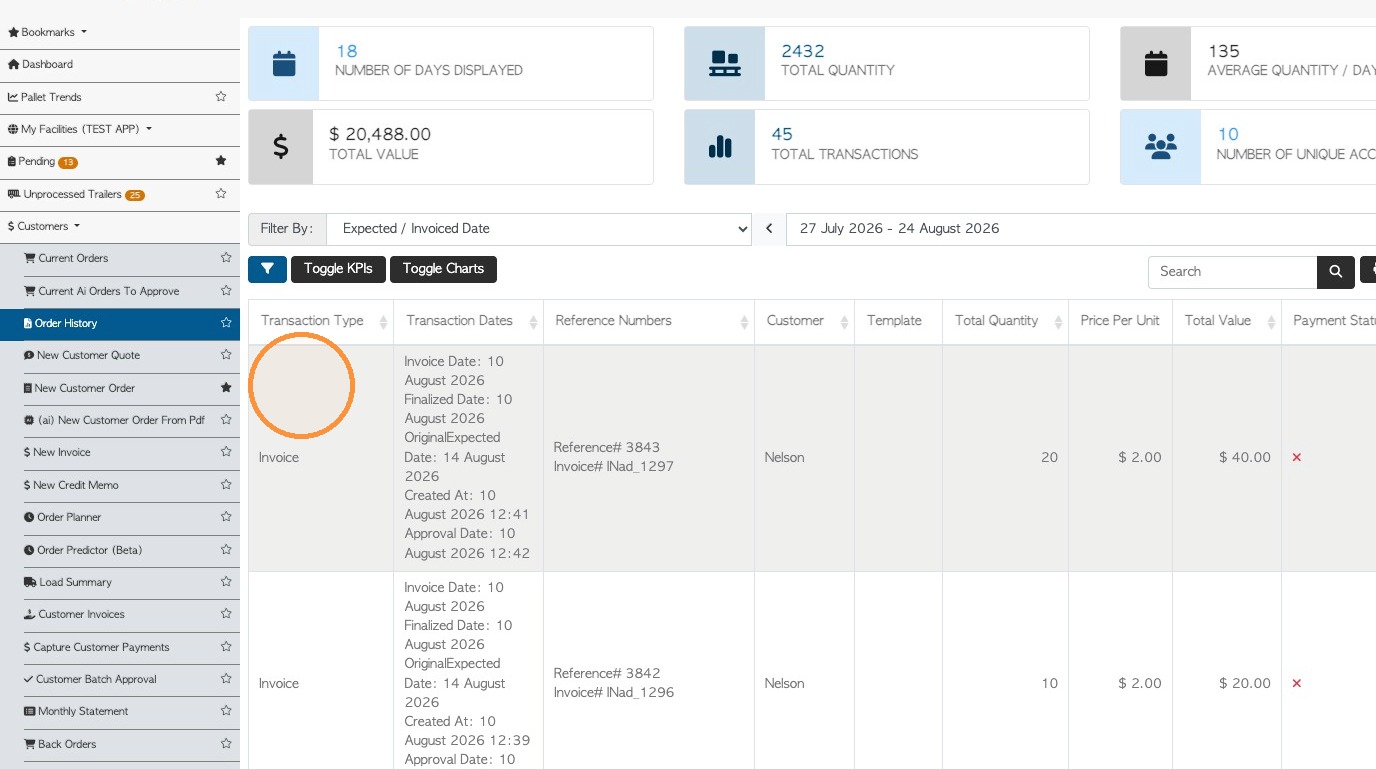
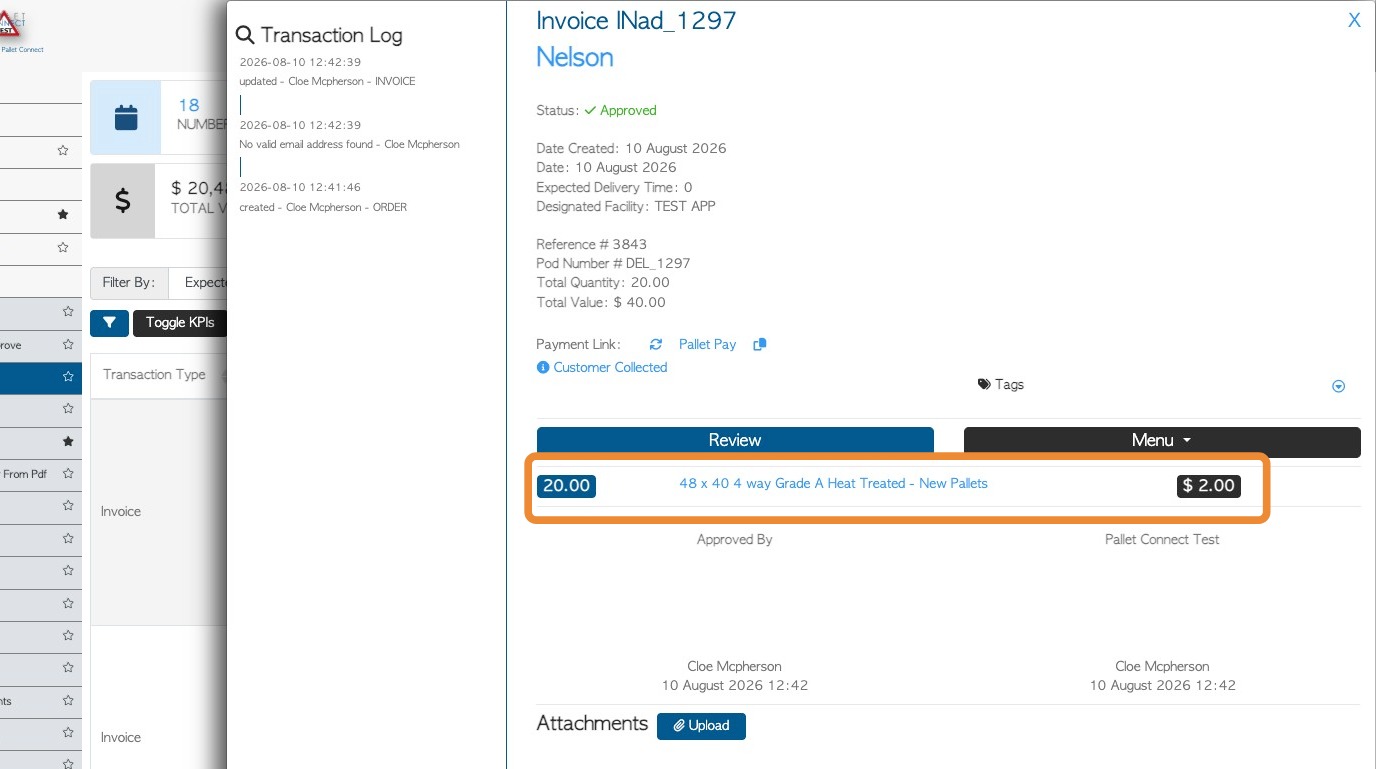
9. The selling price of a pallet is not added to the stock item profile. Items are instead linked to a Customer and customized prices are added in the "Linked Stock Items" tab of the customer profile. This allows one pallet type to be sold at various prices, dependent on the customer.
NOTE: An item does not have to be manually linked to a customer profile. If an item is used in an order, the item and price will be automatically added to the linked stock items tab, after invoice.
Cost Reporting
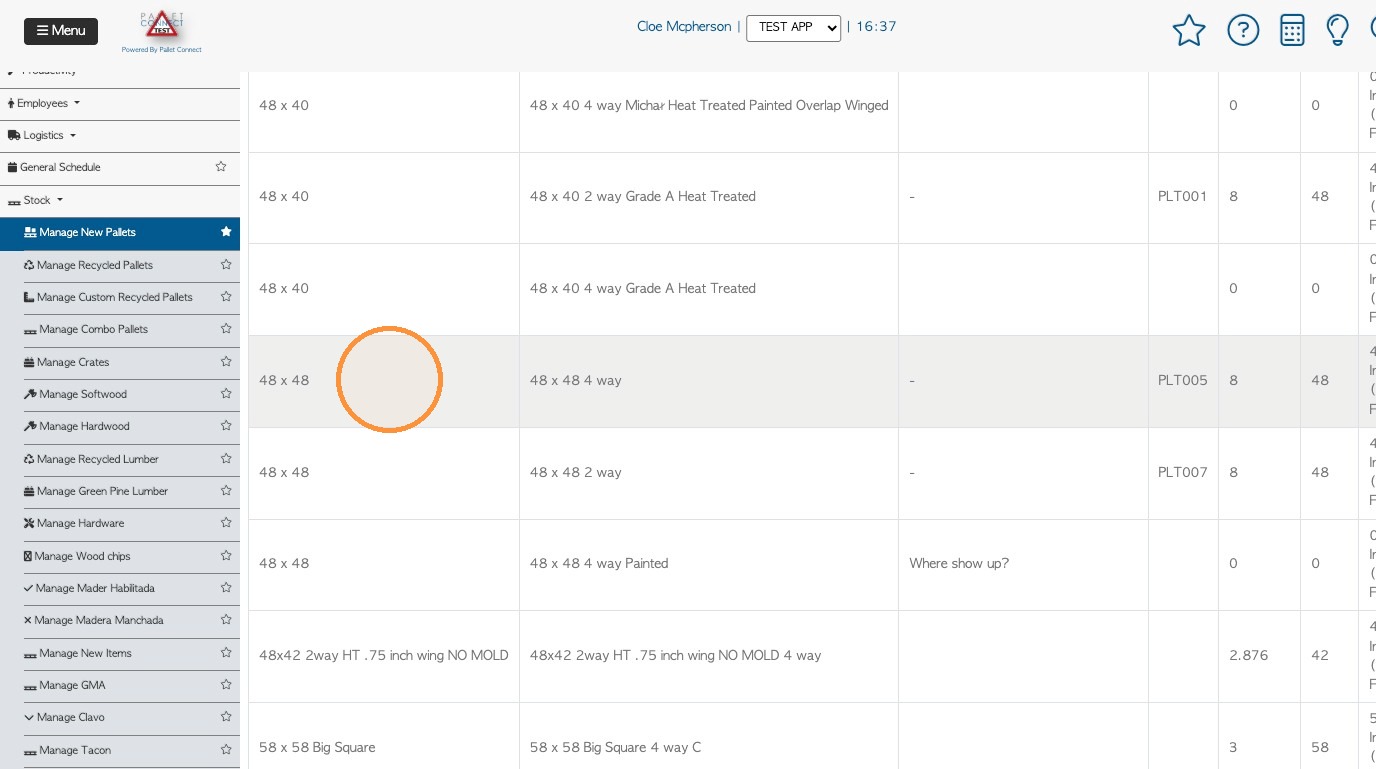
10. STOCK ITEM COSTS: The current costs of a pallet can be viewed in the stock item profile.
Click on a pallet from the stock category list or look up the name using the global search tool.
11. Click on the "Build" tab in the profile.
TIP! The information is also displayed in the "Production" tab.
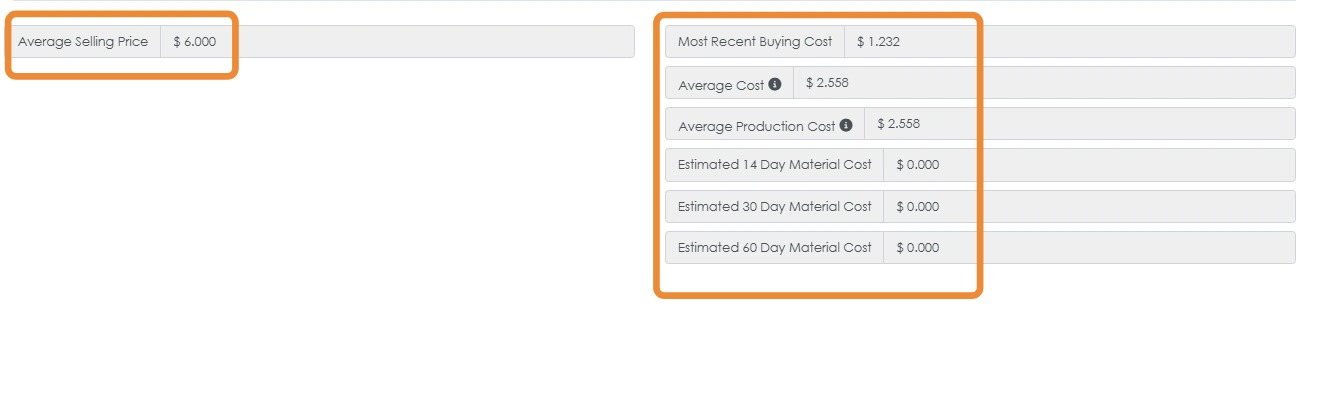
12. The selling price will be displayed as well as the production and material costs.
The "Average cost" is based on last 30 days of purchasing costs (lumber purchases)
The "Average production" cost is based on last 30 days of production costs (piece rate)
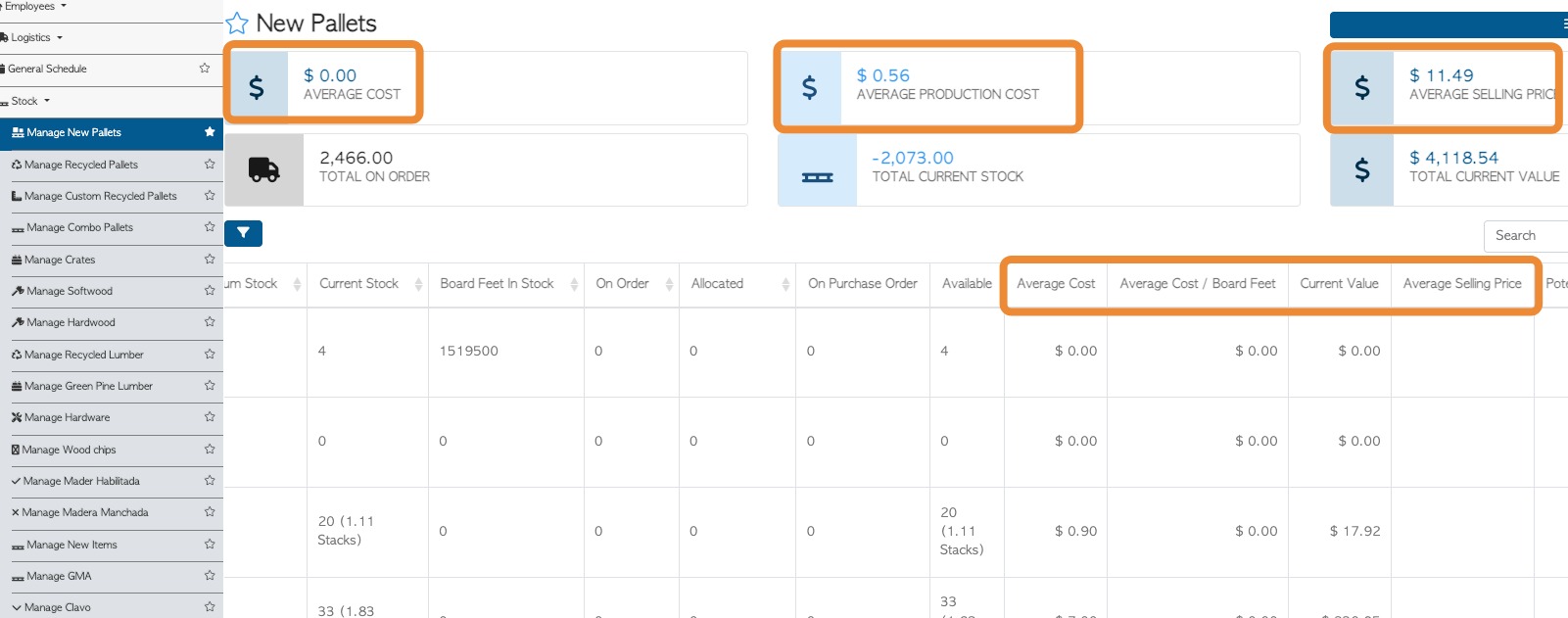
13. STOCK CATEGORY COSTS: To review costs of the stock category or multiple pallet items, click on the stock category page e.g. "Manage New Pallets", and ensure the costing columns are included in the report.
14. Cost Of Goods Sold (COGS) can be found in the Report section of the menu. This is useful to compare cost and selling prices and review profit margins.
TIP! The selling price history of the pallet, can be found from the stock item profile. Selling price changes can be found in the Price History Report. See related articles: